
Wet, cold, unpredictable: is your safety footwear ready for the 2026/27 season?
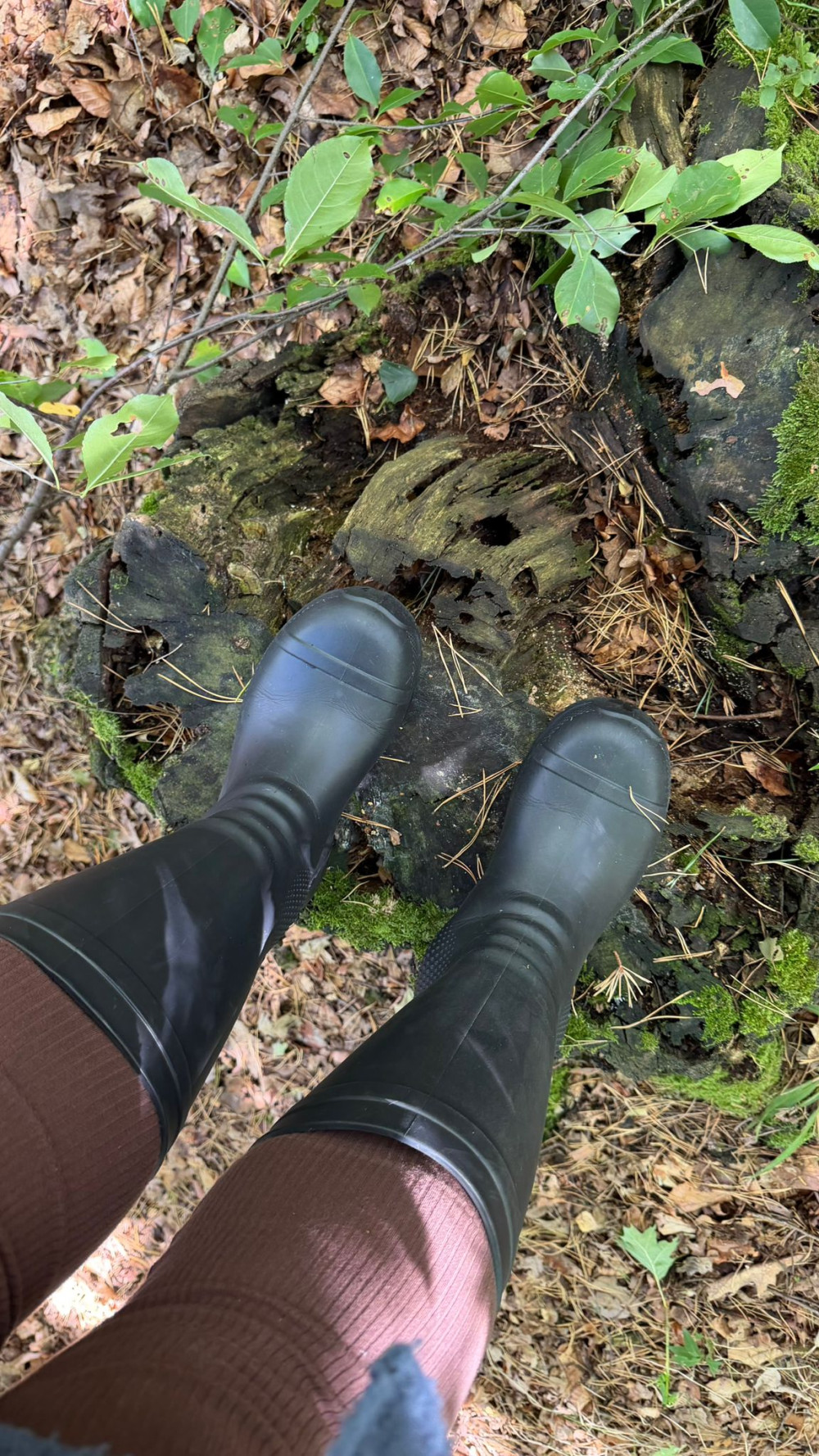

Rain on loading bays. Mud around agricultural buildings. Water carried from outdoor areas onto warehouse floors. Falling temperatures during early-morning shifts. Wet leaves, slush and the first frost on access roads.
For companies operating across Europe, autumn is not simply a change of season. It changes the conditions in which employees work: and therefore the criteria procurement and health and safety teams should use when selecting footwear.
This makes September and October a particularly useful moment to review safety footwear before winter demand reaches its peak.
And in 2026, there is another factor to consider.
European buyers are increasingly looking beyond the price of an individual product. Supply continuity, product documentation, suitability for a particular workplace and the location of the supplier are becoming part of the purchasing decision as well.
So before placing the next order for work boots, it is worth asking:
Are we buying footwear for the catalogue specification or for the conditions employees actually face?

The wet season changes more than the temperature
Autumn introduces a combination of workplace hazards that may not be present during dry summer months.
Rain and mud are obvious examples, but the situation becomes more complex in facilities where employees repeatedly move between indoor and outdoor areas.
Consider a logistics worker who:
- leaves a dry warehouse,
- crosses a wet loading yard,
- enters a vehicle,
- returns through a loading bay,
- walks across an indoor floor,
- and repeats the process throughout an eight-hour shift.
Water and contamination travel with the worker.
The same principle applies to agricultural facilities, construction sites, waste-management operations and industrial plants with outdoor storage areas.
EU-OSHA identifies several factors affecting slip resistance, including the floor, the type and condition of footwear, contaminants such as water or oil, and human factors. Footwear characteristics such as outsole material, flexibility, tread and wear also influence grip.
That is why seasonal PPE planning should start with the working environment rather than with a product catalogue.
One work boot cannot solve every workplace problem
For many procurement teams, one of the most important developments in professional footwear is a move away from the idea of a universal work boot.
A dairy processing facility does not have the same footwear requirements as a farm.
A farm does not present the same risks as a construction site.
And a warehouse employee moving between indoor and outdoor areas may require a different combination of properties from a worker spending an entire shift outdoors.
Before choosing safety footwear, buyers should therefore identify the actual hazards associated with each role.
Questions worth asking include:
- Is the employee regularly exposed to water or mud?
- Are floors contaminated with oils, fats or other substances?
- Is there a risk of falling or rolling objects?
- Could sharp objects penetrate the sole?
- Is the work performed outdoors?
- Are employees exposed to low temperatures?
- How much walking is involved during a shift?
- Does the footwear require frequent washing?
- Does the employee move repeatedly between different working zones?
Only after answering these questions does it make sense to compare specific safety footwear models.
Grip deserves more attention in autumn
Slip resistance is sometimes treated as a simple product feature: a boot either has it or it does not.
Real working environments are more complicated.
The interaction between the outsole, floor and contaminant determines how footwear behaves under specific conditions.
Water is different from oil.
Oil is different from animal fats.
A smooth industrial floor is different from compacted soil, concrete or a muddy agricultural yard.
EU-OSHA notes that liquid and solid contaminants can significantly increase the risk of slipping by reducing contact between the shoe and floor. Tread design and the condition of the outsole are also relevant.
For procurement managers, this has an important consequence:
"Slip-resistant" should not be treated as a generic marketing claim.
Technical documentation, testing and the intended working environment should be considered together.
Autumn is also a good time to inspect footwear already in use. A suitable outsole that has become heavily worn may behave differently from a new one.
Lightweight safety footwear is becoming a practical purchasing criterion
Professional footwear has traditionally been associated with heavy construction.
But weight itself does not provide protection.
Protection comes from the design of the footwear, its protective components and compliance with the relevant requirements.
This distinction matters for employees who may take thousands of steps during a working shift.
Warehouse operatives, agricultural workers, production employees and maintenance teams often spend many hours standing and walking. Footwear therefore affects not only protection against workplace hazards but also everyday mobility.
This is where technologies based on EVA can offer an interesting alternative to heavier traditional constructions.
EVA — ethylene vinyl acetate — is widely used in footwear because it can combine low weight, flexibility and water resistance.
In professional wellington boots, those properties can be especially useful where workers are exposed to water, mud or wet environments for extended periods.
The important distinction is that the material itself should never be used as a substitute for safety certification.
A lightweight boot still needs to provide the level of protection required for the job.
Agriculture: autumn is often the opposite of the off-season

Once major summer field operations are completed, it can be tempting to think that demand for professional agricultural footwear begins to decline.
For many farms, the opposite is true.
Autumn brings:
- harvesting activities,
- livestock work,
- cleaning of agricultural buildings,
- muddy access routes,
- wet grass,
- maintenance operations,
- preparation for winter,
- and repeated work in low temperatures and moisture.
Morning conditions can also be very different from those later in the day.
A field or farmyard may be cold and wet at 6 a.m., muddy in the afternoon and close to freezing again during an evening shift.
For distributors serving agricultural customers, this creates an opportunity to position professional wellington footwear not simply as rainwear, but as equipment designed for everyday work in demanding seasonal conditions.
Logistics: the problem often starts at the warehouse door
Modern logistics environments demonstrate why footwear selection should be based on workflow rather than job title.
Inside the warehouse, conditions may be controlled.
A few metres away, a loading bay can be exposed to rain, wind and falling temperatures.
Employees moving frequently between these areas encounter rapidly changing surfaces.
During autumn and winter, this transition may become more important because moisture from outdoors is carried indoors on footwear and equipment.
From a procurement perspective, logistics companies should therefore analyse:
- how often employees work outdoors,
- what surfaces they walk on,
- whether loading areas are sheltered,
- how much water is transferred indoors,
- whether low temperatures are relevant,
- and what mechanical protection is required.
"Warehouse footwear" is therefore too broad a category.
The specific role matters.
Food processing: wet working conditions are not seasonal
For the food industry, many conditions associated with autumn exist throughout the year.
Water, regular washing, low-temperature areas and contaminants can be part of everyday operations in:
- meat processing,
- fish processing,
- dairies,
- cold-storage facilities,
- washing areas,
- food packing,
- and production zones.
Autumn may nevertheless increase the contrast between outdoor conditions and controlled indoor environments.
An employee entering from a cold yard into a processing area may experience several different temperatures and surfaces within a short period of time.
For footwear buyers, hygiene and easy cleaning may therefore need to be considered alongside slip resistance, toe protection and thermal requirements.
Once again, the correct solution depends on the workplace.
S4, S5 and safety standards: start with the risk, not the label
Professional buyers will frequently encounter safety classes such as S4 and S5.
These classifications matter, but they should not become a shortcut for footwear selection.
More protection is not automatically better if it does not correspond to the hazard.
For one workplace, toe protection may be one of the primary requirements.
In another, penetration resistance may also be necessary.
Elsewhere, the key purchasing criteria may involve waterproof construction, slip resistance, resistance relevant to the working environment or protection in low temperatures.
European safety footwear is commonly assessed against EN ISO 20345, with the current EN ISO 20345:2022 standard forming an important reference point for safety footwear placed on the European market.
Buyers should check the certification and documentation of the specific model being considered rather than assuming that every product from a particular range provides identical protection.
This is particularly important for wholesalers and PPE distributors.
Precise technical information makes it easier to match products to customers operating in different sectors — and reduces the risk of selling a boot on the basis of features it was not designed to provide.
The 2026 procurement trend: resilience joins the specification sheet
One of the most significant purchasing trends of 2026 has little to do with footwear design.
It concerns the supply chain.
In September 2026, the European Commission reported that geopolitical uncertainty is increasingly being treated as a structural part of international business rather than a temporary disruption. Almost two-thirds — 64% — of EU companies surveyed considered themselves prepared to deal with geopolitical risks, while businesses continued to diversify suppliers and markets.
The issue is also increasingly visible in procurement guidance.
EU-supported procurement resources published in 2026 address supply-chain mapping, identification of supply risks and analysis of cost factors throughout the procurement cycle.
For PPE distributors, industrial buyers and wholesalers, that changes the supplier conversation.
The question is no longer only:
"What is the price per pair?"
It is also:
"What happens if we need another 500 pairs during the season?"
A supplier that looks competitive in June may become much less attractive if replenishment becomes difficult in November.
Why production location matters more during a seasonal peak
Buying from a European manufacturer does not automatically make a product better.
But production location can influence several operational factors that matter to B2B customers.
These may include:
- lead times,
- transport distances,
- communication with the manufacturer,
- ability to replenish stock,
- production planning,
- access to product documentation,
- and flexibility when demand changes.
These issues become particularly important with seasonal PPE.
Weather does not always follow purchasing forecasts.
Several weeks of heavy rain, an early cold spell or a large new customer order can quickly change demand for safety footwear.
For distributors, the ability to restock may therefore be nearly as important as the initial purchase price.
EVA safety wellington boots: where lightweight construction meets professional use
Camminare Boots is a Polish manufacturer of EVA footwear supplying wholesalers, distributors, PPE suppliers and other B2B partners across European markets.
Its professional range includes safety wellington boots designed for different working environments, including agriculture, food processing, logistics, industrial applications and outdoor work.
Different models provide different protective properties.
For example, the range includes S4 and S5 safety footwear as well as other professional models, allowing buyers to select footwear according to the hazards identified for a specific workplace.
Camminare Boots currently lists professional safety footwear manufactured in accordance with relevant standards, including selected models certified to EN ISO 20345:2022. The company's English-language safety category also includes models such as Sicuro Work S5, Sicuro Food S4 and Master.
For a B2B buyer, the important point is not simply that EVA footwear is lightweight.
It is the possibility of combining lightweight construction with defined protective properties in footwear intended for professional applications.
Price per pair is only one part of the real procurement cost
Procurement decisions are often compared using the easiest metric available: unit price.
For professional footwear, this can provide an incomplete picture.
A broader purchasing assessment can include:
- service life,
- employee use conditions,
- cleaning requirements,
- replacement frequency,
- stock availability,
- delivery time,
- product documentation,
- range of sizes,
- and the cost of changing supplier during the season.
This becomes increasingly important when footwear is purchased not in dozens, but in hundreds or thousands of pairs.
A seemingly small price difference may lose its importance if the cheaper product creates additional replacement, logistics or availability problems.
For wholesalers, there is another cost to consider: unsold inventory.
A better understanding of end-user sectors helps distributors build a range according to actual demand instead of simply stocking several visually similar work boots.
A practical pre-winter checklist for B2B buyers
Before placing an autumn or winter order, purchasing teams can perform a relatively simple review.
1. Segment users by working environment
Do not treat all employees as one footwear group.
Separate wet production areas, outdoor workers, logistics staff, agricultural users and employees exposed to mechanical hazards.
2. Identify the actual hazards
Determine whether toe protection, penetration resistance, slip resistance, cold insulation or other properties are required.
3. Verify documentation
Check standards and certifications for the exact model being purchased.
4. Consider the complete shift
Ask not only where the employee works, but how much they walk, whether they frequently change environments and how long the footwear remains on their feet.
5. Review the supply chain
Check lead times, production location and options for replenishing stock during the season.
6. Plan beyond the first order
Autumn demand can change quickly.
A purchasing strategy should therefore include a restocking scenario before winter begins.
The best time to prepare for winter is before winter arrives
Safety footwear procurement should not begin with the first frost.
By then, many companies are already reacting to conditions instead of preparing for them.
A more effective approach is to use early autumn to review workplace risks, inspect existing footwear, verify technical requirements and discuss seasonal availability with suppliers.
For PPE distributors and wholesalers, the same principle applies to inventory planning.
The most useful safety footwear range is not necessarily the one containing the greatest number of products.
It is the one that allows customers to match footwear to clearly defined working conditions.
As European companies place greater emphasis on resilience, documentation and continuity of supply, professional footwear purchasing is becoming a broader business decision.
The boot still has to protect the worker.
But in 2026, the supplier behind that boot matters too.
New maldon Jobs Section Launched!!
Vacancies updated hourly!!
Click here: maldon jobs
Share: